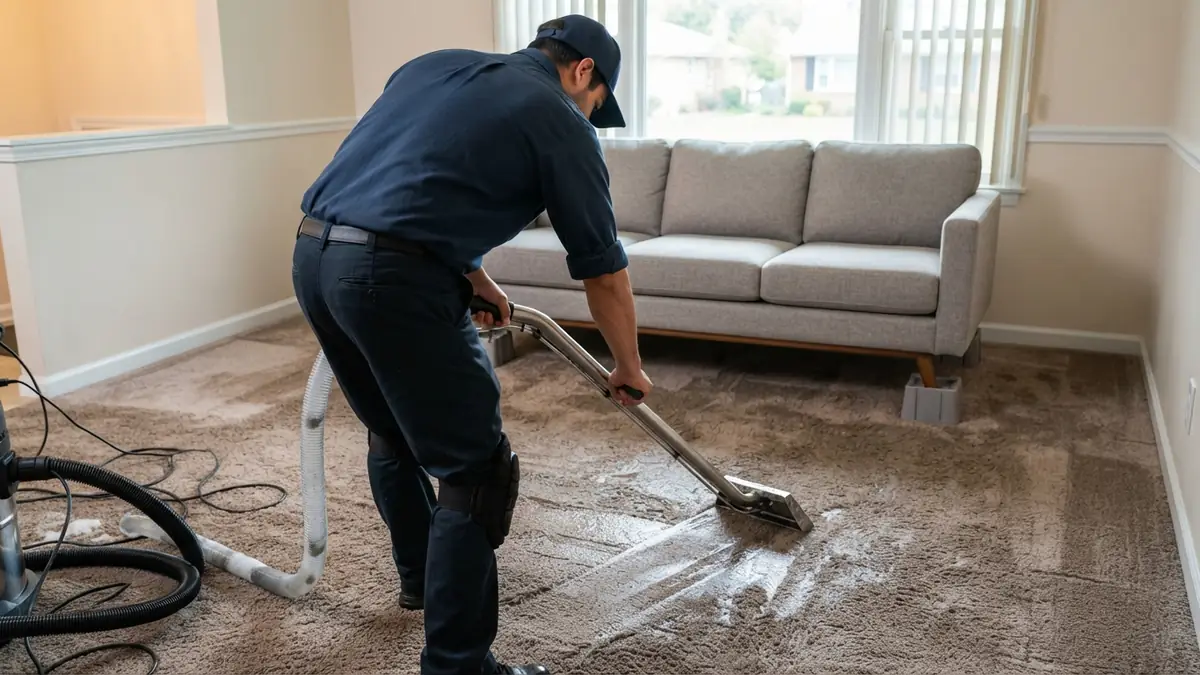
Water Extraction
Need water extraction? A crew pumps out the standing water, pulls it out of carpet and floors, then sets drying equipment and meters every wet wall until it reads dry. Serving 367 cities.
- Answered around the clock
- Written quote up front
- Licensed local crews
Answered around the clock
Water does not wait for business hours, and neither does the phone.
Dried to the readings
Walls and floors are metered until they read dry, not until they look dry.
Licensed local crews
Extraction and drying by licensed crews who work in your area.
Extraction only
One job: getting water out of homes and drying them properly.
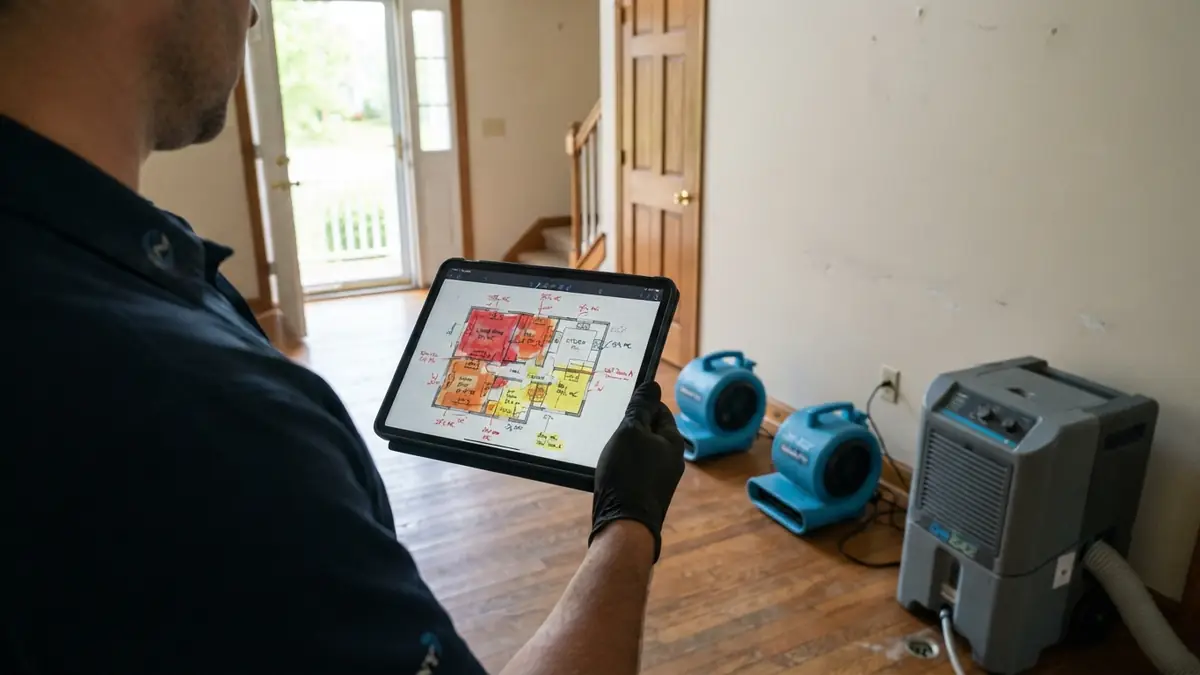
One Job: Getting the Water Out
We handle one job: getting water out of homes and drying them. Every job starts with the source, moves to pumping and extraction, and ends when the moisture meter says the walls and floors are dry, whether the water came from a burst pipe, a water heater, a washer hose or a storm.
The Work We Handle
Standing water pump-out
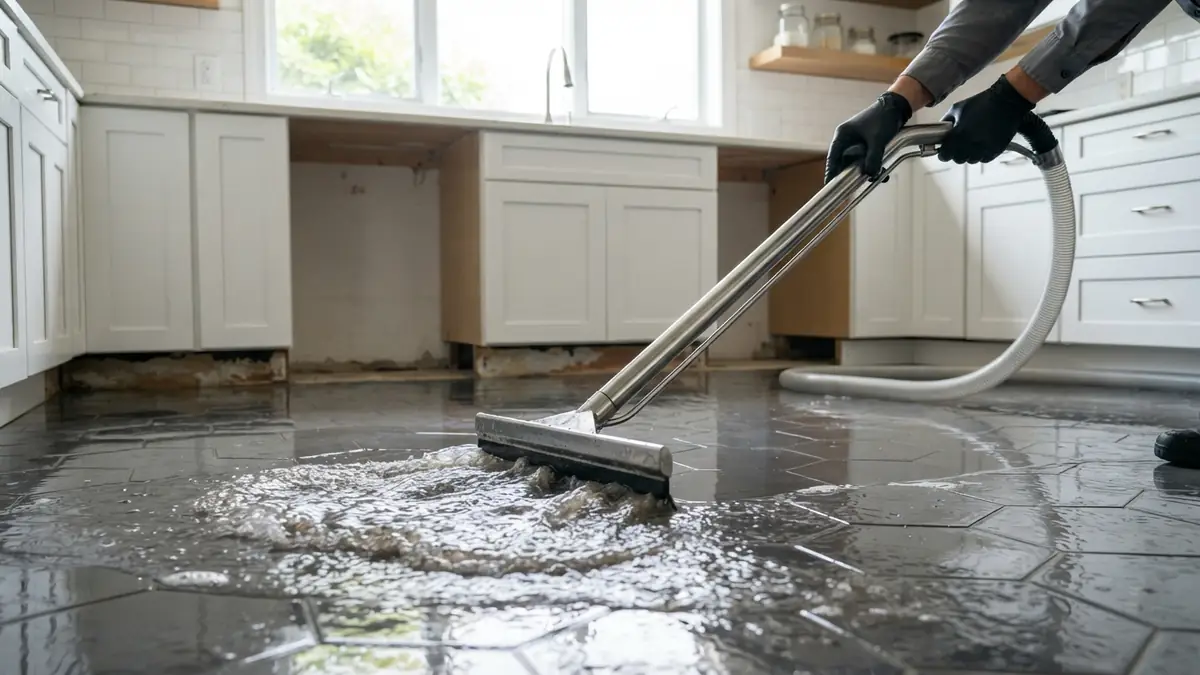
Inches of water in a basement, garage or room pumped out with submersible pumps before extraction starts.
Est. $300–$1,500 · Most urgent
Carpet & pad extraction
Weighted extraction tools press water out of carpet and pad, which a shop vac cannot reach.
Est. $500–$2,500 · Most common
Drying & moisture checks
Air movers and dehumidifiers set to the size of the wet area, with readings taken until it is dry.
Est. $800–$3,000 · Finishes the job
Want a local crew? Find a crew near you · All 367 cities
The first hours decide how much gets saved.
Water keeps moving into carpet pad, drywall and subfloor until it is pulled out. Fast extraction and the right drying equipment often save carpet, floors and walls that would otherwise be torn out.
Answered at any hour
Leaks happen at night and on holidays. The phone is answered and a crew is lined up whenever the water starts.
Dry is measured
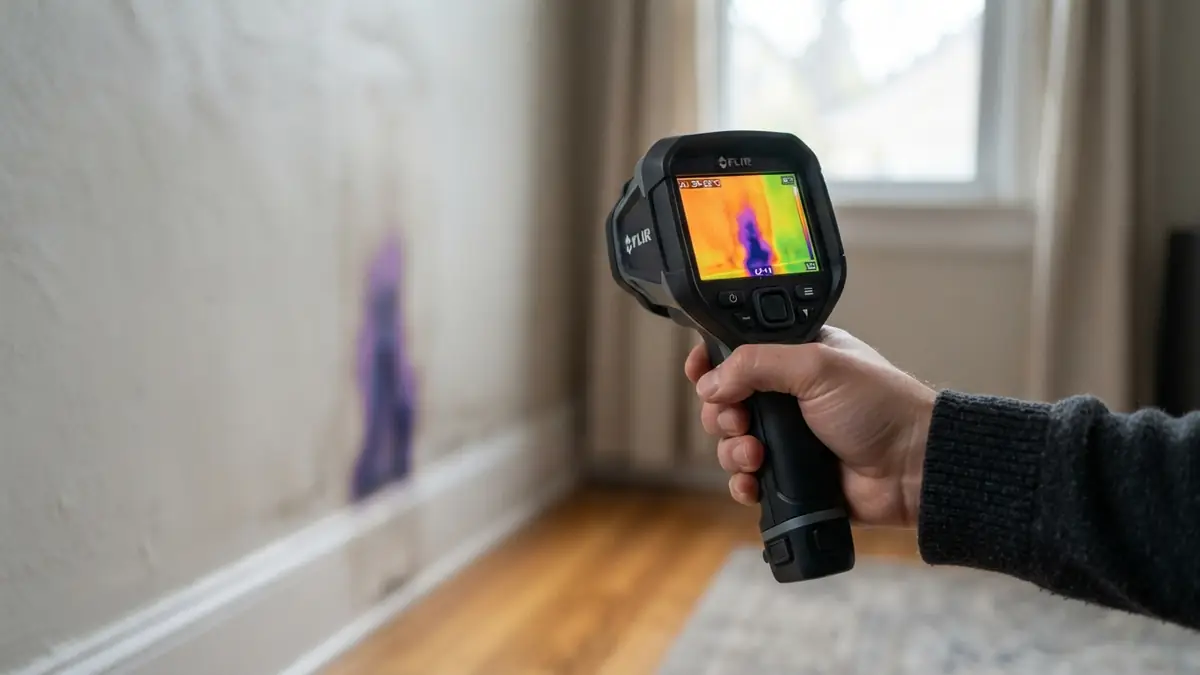
Readings are taken on walls and floors at every visit, so equipment comes out when the house is dry, not when the calendar says so.
Source first, then water
The leak is stopped before extraction, so the crew is not drying a room that is still getting wet.
Saves what can be saved
Carpet, floors and walls are dried in place when the readings and the water type allow it, instead of being torn out by default.
What Extraction Usually Costs
For water extraction, most homeowners pay an estimated $1,200 to $4,000 including drying. Small one-room leaks are estimated at $300 to $1,200, and large losses with dirty water at $4,000 to $12,000.
Small leak extraction
- Source located and stopped
- Standing water extracted
- Carpet and pad checked
- Moisture readings taken
Extraction & drying
- Whole wet area extracted
- Air movers and dehumidifiers set
- Daily moisture readings
- Dried to a dry standard
Large loss & dirty water
- Flooded basements pumped out
- Sewage or storm water removed
- Wet pad and drywall cut out
- Sanitizing before drying
Every range here is an estimate for a typical job. Your own price goes in writing once the wet area is measured.
From First Call to a Dry Floor
- 1
Call
Say where the water came from and which rooms are wet. You hear an estimated range and what to do now.
- 2
Stop & pump
The source is shut off, power made safe, and standing water pumped out.
- 3
Extract & map
Carpet and floors are extracted and the wet areas measured with a meter.
- 4
Dry & prove
Drying equipment runs and readings are taken until materials are dry.
Leaks and Floods We Clean Up Every Week
Burst or leaking pipe
Clean water from a supply line spreads fast. Shut the main, then extraction and drying can save most of the room.
Storm water inside
Water from outside carries soil and debris, so it is treated as dirty water and wet pad is usually removed.
Flooded basement
Inches of water in a basement are pumped out first, then carpet, drywall and stored items are dealt with.
Dishwasher or ice maker leak
Slow leaks under cabinets soak the subfloor and toe kicks before anyone notices.
Leak from upstairs
Water from a bathroom or unit above soaks the ceiling, walls and carpet on the floor below.
Wet carpet that smells
A musty smell means the pad underneath is still wet and needs extraction or removal.
Water under hard floors
Laminate, vinyl plank and hardwood trap water underneath, where it cannot dry on its own.
Sewer backup
Water from a floor drain or toilet that backs up is contaminated and is cleaned before drying.
AC drain overflow
A clogged condensate line can drip into ceilings and closets for weeks.
Need Water Extraction? Call Now
Wet materials start to smell within days. Extraction and drying now cost less than tear-out later.
Where We Work
367 cities in 42 states.
Water Extraction: FAQs
Something we missed?
Ring us. The person who picks up deals with wet homes every day, and pricing it over the phone costs nothing.
Call (866) 914-0544How much does water extraction cost?
Most jobs cost an estimated $1,200 to $4,000 including drying. A one-room leak is estimated at $300 to $1,200, and large losses with dirty water at $4,000 to $12,000. Whatever the source, the price is agreed in writing before the drying starts.
How long does water extraction take?
Pumping and extraction usually take a few hours for a room or a basement. Drying afterwards typically runs three to five days with air movers and dehumidifiers, checked with a meter each visit.
What should I do first when water is on the floor?
Shut off the water at the main valve, turn off power to wet rooms at the breaker, move what you can off the floor, take photos, and call for extraction.
Can wet carpet be saved?
Often, yes, if the water was clean and it is extracted within a day or two. The pad underneath is usually replaced because it holds water. Carpet soaked by sewage or flood water is removed.
How do I get water out of a flooded basement?
Make sure the power is off, then pump out standing water with submersible pumps. After that, carpet and floors are extracted and drying equipment is set up.
Get a Crew on the Way
(866) 914-0544 reaches people who handle water in homes every day. Describe what happened and a crew is lined up.